How to Choose the Right Kitchen Cabinet Material in Sydney
Choosing the right kitchen cabinet material is an important part of planning a new kitchen or renovating an existing one. Kitchen cabinets need to withstand daily use while complementing your benchtops, flooring, appliances and overall interior style. For Sydney homeowners, factors such as durability, moisture exposure, maintenance, appearance and budget should all be considered before making a final decision. Understanding the differences between common cabinet materials can help you select a solution that suits your home and lifestyle.
What Is the Best Material for Kitchen Cabinets?
There is no single kitchen cabinet material that is best for every home. Laminate, melamine, polyurethane, timber and other finishes can each provide different combinations of appearance, durability, maintenance requirements and cost. The right choice depends on how the kitchen will be used, the desired design style, the available budget and the level of maintenance you are comfortable with. A custom joinery professional can also help match materials to your specific kitchen design.
1. Laminate Kitchen Cabinets
Laminate is a popular kitchen cabinet option because it provides a wide range of colours, patterns and finishes. Modern laminates can replicate the appearance of timber, stone and other materials, making them suitable for contemporary and traditional kitchen designs. They are generally practical for everyday kitchens and can be relatively straightforward to clean.
Laminate can also be an attractive option for homeowners who want to manage their renovation budget while still achieving a modern appearance. When selecting laminate cabinetry, consider the quality of the product, edge details and the environment in which the cabinets will be installed.
2. Melamine Kitchen Cabinets
Melamine is commonly used for cabinet interiors and can also be used for visible cabinet surfaces. It consists of a decorative resin-impregnated paper surface bonded to a board substrate. Melamine is available in many colours and woodgrain patterns, allowing it to work with a variety of kitchen styles.
One of its practical advantages is that the surface is relatively easy to clean and maintain. Melamine can be a suitable option for homeowners looking for functional cabinetry with a clean, consistent finish.
3. Polyurethane Kitchen Cabinets
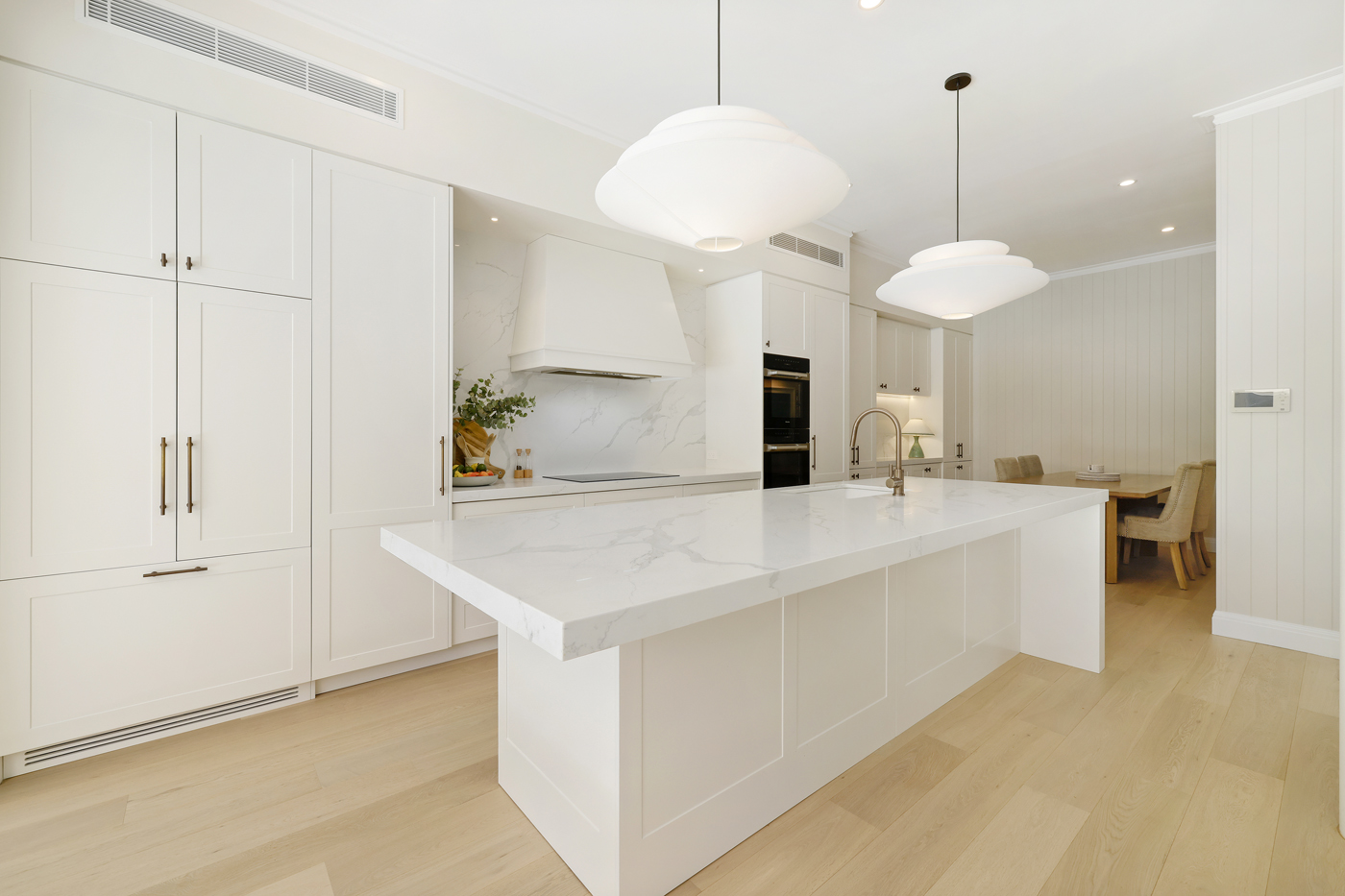
Polyurethane cabinetry is often selected when homeowners want a smooth, refined painted finish. It can provide a sophisticated appearance and is available in a broad range of colours. This makes polyurethane useful for creating customised kitchen designs where the cabinet colour is an important part of the overall interior.
Polyurethane can work particularly well in contemporary, Hamptons, classic and transitional kitchens. The final result depends on the quality of preparation, coating, manufacturing and installation, so professional workmanship is important when selecting this type of finish.
4. Timber Kitchen Cabinets
Timber can introduce warmth, natural texture and character into a kitchen. Natural timber has variations in grain and colour, meaning each project can have a distinctive appearance. Timber can complement a range of interior styles, including contemporary, traditional, farmhouse and natural-inspired kitchens.
Because timber is a natural material, maintenance requirements can vary depending on the species and finish. Homeowners should consider how much care they are prepared to provide and select a suitable protective finish for the intended kitchen environment.
5. MDF-Based Cabinetry and Painted Finishes
MDF is another material commonly used in kitchen cabinetry, particularly where a smooth surface is required for painted finishes. Its consistent surface can be suitable for producing clean lines and detailed door profiles. MDF can be used in a variety of cabinet designs, although the specific product and finish should be selected according to the expected conditions of the kitchen.
When considering MDF cabinetry, ask about the grade of the board, moisture resistance, edge treatment and coating system. These details can influence how the finished cabinetry performs over time.
How Do You Choose the Right Kitchen Cabinet Material?
Start by considering how your kitchen is used every day. A busy family kitchen may require durable and easy-to-maintain surfaces, while a formal or lightly used kitchen may place greater emphasis on decorative finishes. Think about cooking frequency, cleaning habits, children or pets, moisture exposure and the amount of wear the cabinetry is likely to receive.
Your preferred appearance is another important consideration. If you want a natural look, timber-inspired laminates or real timber may be suitable. For a smooth painted appearance, polyurethane or an appropriate painted board product may be worth considering. Your joinery designer can help compare the available finishes against your design goals.
Consider Kitchen Cabinet Durability
Kitchen cabinets are opened, closed, cleaned and exposed to everyday activity almost every day. For this reason, durability should be considered alongside appearance. Look at the cabinet board, door material, hinges, drawer runners, edges and surface finish as a complete system rather than judging the material by its appearance alone.
Quality manufacturing and installation are also important. Even a suitable cabinet material can perform poorly if it is incorrectly installed or exposed to conditions beyond the manufacturer's recommendations. Ask your joinery provider about the materials being proposed and how they are suited to your kitchen environment.
Think About Moisture and Cleaning
Kitchens naturally experience moisture from sinks, dishwashers, cooking and cleaning. Cabinet materials should therefore be selected with the environment in mind. Areas immediately around sinks and dishwashers deserve particular attention because prolonged moisture exposure can damage unsuitable materials or poorly protected edges.
Cleaning requirements should also influence your decision. Choose surfaces that fit your household's cleaning routine and follow the manufacturer's recommendations for cleaning products. Avoid abrasive products or methods that may damage decorative finishes.
Match Cabinet Materials With Your Benchtop
Your cabinet material should work visually with your chosen benchtop. For example, a patterned stone-inspired benchtop may pair well with simpler cabinet finishes, while plain cabinetry can provide a neutral background for a more distinctive benchtop. Consider the cabinet doors, panels, handles, splashback and flooring as part of one overall design.
It is useful to view physical samples before making a final selection. Colours and textures can look different under natural daylight, artificial lighting and different surrounding finishes. Comparing samples in your actual kitchen can help you make a more informed design decision.
How Much Do Different Kitchen Cabinet Materials Cost?
Kitchen cabinet costs vary according to material, construction method, finish, cabinet configuration, hardware and installation. More specialised finishes and customised features can increase the overall investment, while practical laminate or melamine solutions may suit homeowners working with a tighter budget.
It is important not to compare cabinet materials based solely on the price per panel or door. The complete cost can include cabinet construction, internal components, hardware, handles, finishing, delivery and installation. Requesting a detailed quotation provides a clearer understanding of what you are paying for.
Custom vs Standard Kitchen Cabinet Materials
Custom kitchen joinery provides greater flexibility in selecting cabinet materials and designing the cabinetry around your home's dimensions. Standard cabinetry is generally manufactured in predetermined sizes, which can limit design options when dealing with unusual walls, corners or specific storage requirements.
With custom cabinetry, material selection can be combined with tailored storage, appliance integration and individual design preferences. This can be particularly useful for Sydney homes where the kitchen layout may require cabinetry that cannot be achieved efficiently using standard cabinet sizes.
Kitchen Cabinet Hardware Also Matters
The cabinet material is only one part of a well-designed kitchen. Hinges, drawer runners, handles and internal storage systems influence how the cabinetry feels and performs during everyday use. Soft-close drawers, pull-out pantry systems and specialised corner storage can improve convenience and organisation.
When planning your kitchen, consider the cabinet material and hardware together. A durable cabinet finish paired with suitable quality hardware can provide a more functional solution than focusing on the visible surface alone.
Common Mistakes When Choosing Kitchen Cabinet Materials
One common mistake is choosing a cabinet finish based only on appearance without considering maintenance and everyday use. Another is selecting materials without checking their suitability for areas exposed to moisture. Homeowners can also overlook the importance of hardware, edge treatment and professional installation.
It is also worth considering the entire kitchen design before choosing a material. Cabinet colours and finishes should complement the benchtop, splashback, flooring and appliances rather than being selected in isolation. Taking time to compare samples and specifications can help avoid expensive design changes later.
Why Choose Custom Kitchen Joinery in Sydney?
Custom kitchen joinery allows cabinetry to be designed around the specific dimensions, storage requirements and style of your Sydney home. You can choose cabinet finishes, door profiles, hardware and storage features while ensuring the cabinetry works with your appliances and available space.
A custom approach can also make it possible to use different materials or finishes in different areas of the kitchen where appropriate. For example, you may choose a durable practical finish for high-use cabinetry while introducing a contrasting finish for an island or feature section.
Get the Right Kitchen Cabinet Material for Your Home
Choosing kitchen cabinet materials involves balancing appearance, durability, maintenance, functionality and budget. Laminate, melamine, polyurethane, timber and other cabinetry options each have characteristics that may suit different kitchen designs and household requirements.
ICAD Joinery can help Sydney homeowners explore custom kitchen cabinetry options based on their available space, preferred style and practical requirements. With careful material selection and professional design, your kitchen cabinetry can provide useful storage, a cohesive appearance and functionality designed around your everyday needs.
Frequently Asked Questions About Kitchen Cabinet Materials
What is the most popular material for kitchen cabinets?
There is no single material that is suitable for every kitchen, but laminate and melamine are widely used for practical cabinetry, while polyurethane and timber are popular for more customised visual finishes. The right choice depends on the desired appearance, durability, maintenance requirements, budget and overall kitchen design.
Are laminate kitchen cabinets a good choice?
Laminate can be a practical choice for many kitchens because it is available in a wide range of colours and patterns and can be relatively easy to maintain. It can also provide designs that replicate timber and stone appearances. The quality of the laminate, substrate, edge treatment and installation should all be considered.
Is polyurethane good for kitchen cabinets?
Polyurethane can provide a smooth, refined painted finish and is available in many colours. It can suit contemporary, classic and Hamptons-style kitchens where a customised painted appearance is desired. The quality of preparation, coating and manufacturing plays an important role in the appearance and long-term performance of the finished cabinetry.
What kitchen cabinet material is easiest to maintain?
Many homeowners choose laminate or melamine because their surfaces can be relatively straightforward to clean. Other finishes can also be practical when properly maintained. The easiest material for your kitchen depends on the specific product, finish and usage. Always follow the manufacturer's cleaning recommendations to protect the cabinet surface.
Should kitchen cabinets be moisture resistant?
Moisture resistance is an important consideration for kitchen cabinetry, particularly around sinks, dishwashers and other areas exposed to water. Ask your joinery provider about the board material, edge protection and finish being used. Correct installation and preventing prolonged moisture exposure are also important for protecting kitchen cabinets.



 Our Recent Projects